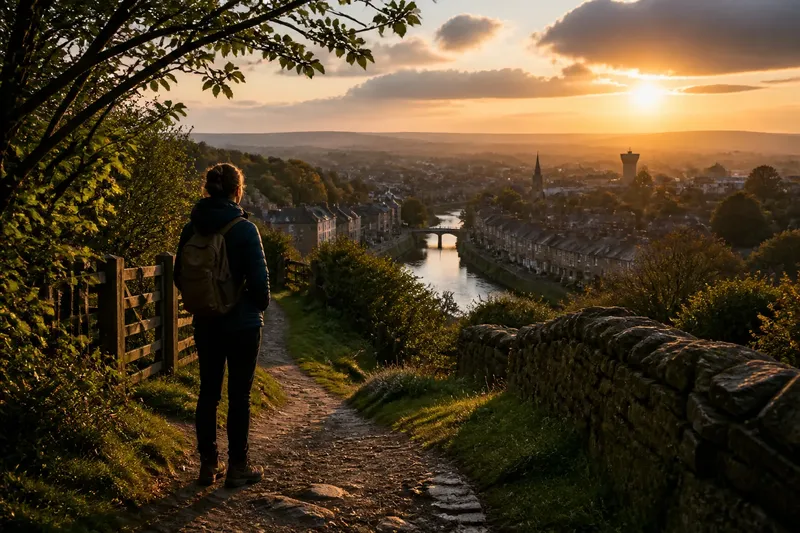
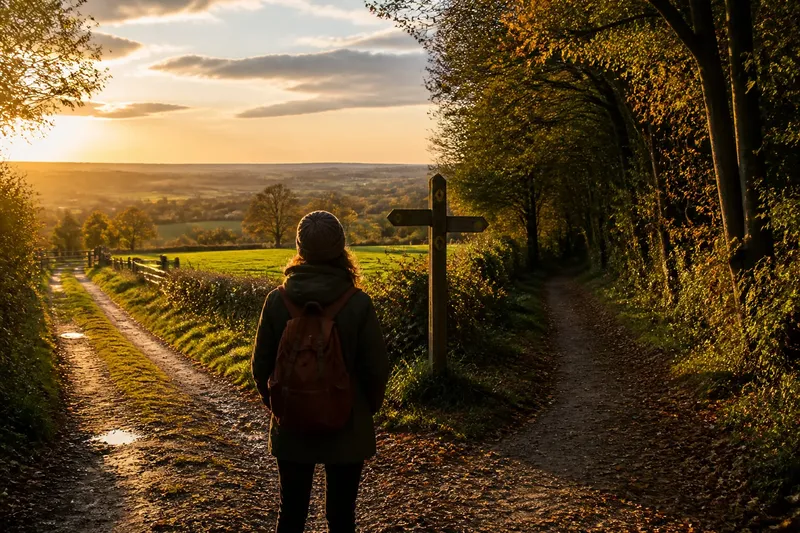
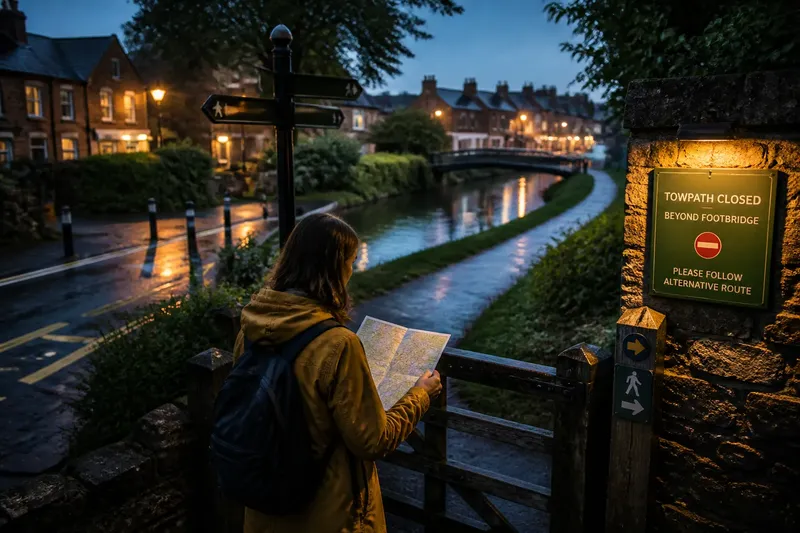
Before the Weekend Stroll: How Nearby Walks Became Leisure
Nearby walks became leisure as free time and countryside access changed. Learn what to notice in old paths, gates, lanes, and the landscape around you.
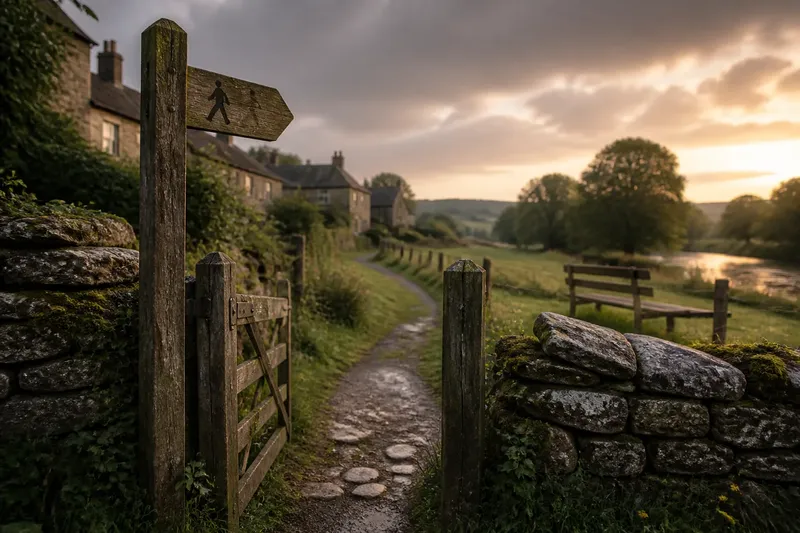
The common mistake is to treat an old footpath as if it were always made for a Sunday ramble. Nearby walks became leisure only as people gained more choice about how to spend time and, in some places, new ways to reach the countryside. Miss that shift, and a lane can look like scenery alone when it once served work, errands, or a route home.
Need before pleasure
For much of everyday life, walking was not a recreational category. People went on foot because they needed to get somewhere: to a field, a mill, a place of work, a market, or a neighboring settlement. The route mattered for its usefulness. A dry track across a slope could be more valuable than a grand view.
That practical purpose still shows in the ground. A path may run directly between buildings, follow a stream, or cross a field with little interest in scenic variety. A narrow passage beside a wall might connect homes to a road rather than invite visitors to linger. Look for these lines of purpose before reading a route as a leisure trail.
Old paths do not have one meaning, though. A route used for necessary travel could later become a pleasant walk without changing its course. The landscape keeps the line; people change what they expect from it.
Free time changes the walk
Leisure walking depends on a distinction between time that must be spent getting things done and time someone can choose to use. That distinction did not arrive everywhere at once. Work patterns, transport, and local custom shaped whether a walk could be an outing rather than simply the way to reach the next task.
As organized work and regular time away from it became more familiar in some communities, a walk could be planned for its own sake. The destination might be a hill, a riverside, or simply a loop back to the starting point. Walking acquired a different kind of value: attention to the route, company, fresh air, and the pleasure of being outdoors.
Listen for that change in local language. A track called a way to the village points to connection; a later name such as a common walk or promenade suggests a different social use. Names are clues, not proof. Ask how the route meets nearby homes, work sites, and gathering places before drawing a conclusion.
Access has a history
A countryside path is not automatically open to everyone. Paths may cross private land, follow public rights of way, or pass through places with local access rules. The difference can be hard to see in the landscape: a worn track and a welcoming gate do not, by themselves, establish permission.
Notice the practical signs that frame a route. A waymark, public footpath sign, stile, or gate may help identify a recognized path, while a posted notice can clarify a restriction. For a planned outing, consult a local rights-of-way map or council information rather than inferring access from appearance. Where local rules or the status of a route are uncertain, check the relevant land manager or local authority.
Access also shaped who could make countryside walking part of ordinary leisure. Distance from a town, transport connections, available time, and social expectations all affected who could reach a path and feel entitled to use it. A rural lane close to a settlement might be an everyday route for residents and an occasional excursion for visitors.
Read the route’s clues
On a short local walk, small features can suggest how a route served different people at different times:
- Direct lines: A path that links a settlement to a road, bridge, or former work area may reflect practical movement more than scenic design.
- Gate and stile patterns: These can mark a route through working land. Notice how they guide passage, but do not treat them as permission on their own.
- Roadside benches: A place to pause can signal that resting and looking have become part of the route’s use.
- Waymarks and signs: These help visitors follow a path and can show how a route is presented for public recreation.
- Changes in surface: A firm lane becoming a grassy track may point to a shift in terrain or use. Compare the route with the nearby buildings and fields rather than guessing from the surface alone.
Say you find a signed path leaving a village street, crossing pasture, and ending at a riverside bench. You could note that the direct village connection suggests a useful route, while the waymark and resting place make a recreational visit easier to follow. That is a careful reading of visible clues, not a claim about the path’s full history.
Questions along the way?
Were old footpaths originally made for leisure?
Many routes served practical travel, including access between settlements, fields, and workplaces. Some later became leisure walks, and others may have carried both purposes at once.
What made countryside walking a pastime?
More choice over free time helped people walk for enjoyment rather than only to reach a destination. Transport, access, and local customs also influenced who could take such walks and where.
How can I tell whether a path is public?
Look for official waymarks and public footpath signs, then verify the route on a local rights-of-way map or council resource. A visible track or open gate alone does not settle its legal status.
Keep the outing simple
For a nearby walk with a little historical curiosity, choose a route that starts near a settlement and passes a visible boundary: a bridge, field edge, old lane, or village entrance. Follow a map, stay on paths you are entitled to use, and notice where the route seems designed for direct passage and where it invites a slower visit.
It is not worth the effort to assign a precise age or original purpose to every bend from appearance alone. A modest note—“this path links the village to the river, and its signs welcome walkers”—can be more accurate than a confident story unsupported by local records.
The next time you set out, keep the phrase nearby walks became leisure in mind, then let the route complicate it. A single path may still carry someone to work, guide a neighbor to the next village, and offer a visitor an afternoon outdoors. Its character lies partly in that overlap.